


This guide is for anyone viewing a long-term rental in Phuket, particularly families and expats choosing a home rather than a short holiday base. It explains eight practical red flags to check before you transfer a deposit or sign, including rent that does not fit the property, unclear utility charges, damp and mould, noise, access, and vague repair obligations.


 1. The rent does not match the property
A low monthly rent can be a good find, but it can also signal problems with the building, access, furnishings, location, or length of the contract. Compare the property with at least three similar rentals in the same area before deciding whether the price is reasonable.
Phuket rents vary widely between neighbourhoods and property types. A basic flat in Phuket Town or Kathu will serve a different lifestyle from a villa near Bang Tao, Rawai, or Pa Klok. A property close to an international school may cost more because families value shorter school runs. A cheaper home can become expensive if you need daily taxis, extra security, furniture, or frequent repairs.
Ask what the quoted price includes and whether the rate changes during high season, renewal, or a longer stay. Make sure the monthly rent in the contract matches the amount discussed in messages and during the viewing.
How to Avoid Rental Scams & Verify Listings in Phuket
If you’re searching for rentals online through Facebook Marketplace or agent websites, extra caution is needed before transferring a deposit. In the video below, local Phuket real estate specialist Mike Davison breaks down how to spot fake listings, verify agent profiles, and ensure you get your security deposit back at the end of your lease.
2. The costs and bills are unclear
You should know the full monthly cost before signing, including rent, common-area fees, electricity, water, internet, pool or garden maintenance, rubbish collection, and any cleaning charge. If the landlord or agent cannot explain how each bill is calculated, treat that as a warning sign.
- Ask whether electricity is billed by the government meter or through the property owner.
- Ask how water is measured and when bills are due.
- Confirm whether internet service is already installed and whether you pay the provider directly.
- Write down the deposit, advance rent, payment dates, and refund conditions.
- Request receipts for every payment.
Do not rely on a verbal promise that a cost is “included”. Put the amount or calculation method in the agreement.
3. You find damp, mould, or water damage
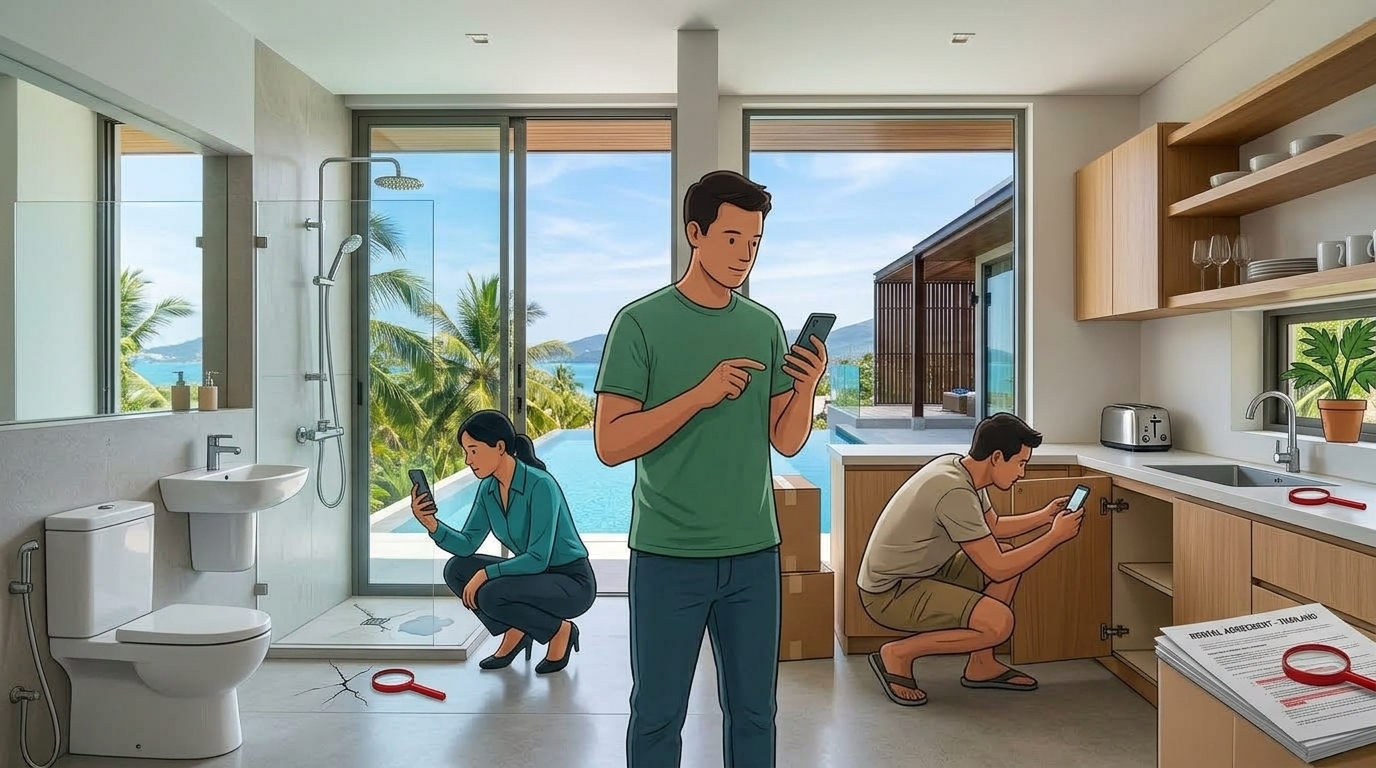
Damp and mould need more than a quick wipe before you move in. Check wardrobes, skirting boards, ceilings, bathrooms, kitchen cupboards, and the areas behind large pieces of furniture. A musty smell can be easier to notice than visible mould.
Look for bubbling paint, dark patches, swollen wooden doors, rusty fittings, and stains around air-conditioning units. Run the taps and showers for several minutes, flush each toilet, and check whether water drains quickly. If you view the property during a dry spell, ask whether the roof, windows, or walls leak during heavy rain.
Photograph every mark before signing. If the landlord promises repairs, record what will be repaired, who will pay, and the expected completion date in writing.
4. The viewing does not reveal the real noise level
A quiet midday viewing tells you very little about evenings, weekends, or school-run traffic. Visit the property at two or three different times if possible, including after dark.
Listen for construction, bars, traffic, barking dogs, nearby pumps, generators, lifts, and noise from shared corridors. In some areas, seasonal traffic and tourism can change the feel of a road considerably. Patong and parts of the busier west coast may feel very different from a quiet residential street in Phuket Town or the north-east of the island.
If you have children, consider whether bedrooms face a road, pool, car park, or communal area. Ask whether construction is planned nearby, but verify important answers with the building management or local residents rather than relying on a casual comment.
5. The internet and mobile signal are unreliable
Internet quality can affect remote work, schoolwork, banking, healthcare appointments, and ordinary family life. Test the connection in the rooms where you will work or study rather than checking it only beside the router.
Ask which provider serves the building, whether the line is private or shared, and how quickly faults are usually handled. Check mobile signal inside bedrooms, bathrooms, and the parking area. If you need reliable video calls, bring your own device and run a real speed test during the viewing.
Do not assume that a modern-looking condominium has dependable internet in every unit. Confirm the service before you pay, and ask what happens if the existing connection cannot be transferred to your name.
6. Nobody will explain who handles repairs
Your contract should make repair responsibilities clear before you move in. Ask who deals with air-conditioning faults, plumbing, appliances, electrical problems, pool equipment, garden maintenance, and damage caused by leaks or storms.
Find out how you report a problem and who responds outside office hours. A landlord who replies quickly before payment may not manage repairs personally after you move in. Ask whether you will deal with the owner, an agent, a juristic office, or a maintenance company.
Record the condition of the property in a signed inventory. Include furniture, appliances, air-conditioning units, keys, remotes, meter readings, and existing damage. This gives both sides a clearer reference when you leave.
7. The location makes daily life harder than expected
A rental can look ideal on a map and still create difficult daily journeys. Test the route at the time you will use it, especially if you need to reach a school, workplace, hospital, supermarket, or childcare provider.
Check the road after rain, the entrance after dark, parking arrangements, and whether a car can reach the property easily. Some homes are attractive because they sit away from main roads, but narrow lanes, steep access roads, poor lighting, or flooding can become serious problems.
Think about your normal week rather than your first impression. A family living in Bang Tao may prioritise school access and traffic planning. Someone in Rawai may value restaurants and local services but need more time for journeys to other parts of the island. A home in Phuket Town can suit people who want shops, hospitals, and established neighbourhood services nearby.
If you are relocating with children, read this guide to moving to Phuket with your family before choosing a location around one attractive property.
8. You are pressured to pay before checking everything
Pressure to transfer money before you have seen the correct unit, checked the contract, or confirmed who has authority to rent the property is a serious warning sign. Take time to verify the owner or authorised agent and make sure the payment details match the person or company named in the agreement.
Be cautious if you hear that another person will pay immediately, the price is available for only a few minutes, or documents will be supplied after the transfer. A genuine rental decision should allow enough time to inspect the property, ask questions, and review the terms.
Before paying, confirm these points:
- You have viewed the exact property you will occupy.
- The contract names the correct parties and property.
- The payment schedule and refund conditions are written down.
- The inventory and existing damage are recorded.
- You have received clear payment instructions and a receipt.
- You know who will hand over the keys and handle future problems.
A final Phuket rental checklist
Before signing, walk through the property slowly and test the essentials. Turn on taps, flush toilets, run air-conditioning units, open windows, check locks, test appliances, and inspect every room for damp or damage. Take dated photographs and keep copies of messages, receipts, the inventory, and the signed agreement.
Ask yourself whether the property still works if your routine changes. Consider school holidays, rainy-season journeys, visiting family, internet needs, medical access, and the cost of getting around without relying on a motorbike. If the home only works under perfect conditions, it may not be the right rental for your day-to-day life.
For more planning guidance, you can also review the Phuket visa documents checklist if your rental forms part of a longer relocation. Your visa position, budget, neighbourhood choice, and housing contract should fit together before you commit.
None of this replaces knowing your own specific situation, so if anything here raises a question that’s particular to you, book a free consultation below and we’ll walk through it together.
Frequently Asked Questions
Should the rental contract be in English?
Yes, insist on an English version even if you are comfortable letting other parts of the process run in Thai. A contract is exactly the wrong place to rely on a translation app or someone else’s summary, since a mistranslated or omitted clause is the one thing you will not catch until it matters. If you do not read Thai, get both versions and have someone independent confirm they match rather than taking the landlord’s word for it.
How much deposit should I expect to pay for a long term rental in Phuket?
One month’s rent is the common figure quoted to foreigners. It is worth knowing that Thai renters sometimes negotiate different terms for the same property, so the number you are quoted is not necessarily fixed, and it is reasonable to ask rather than assume it is non-negotiable.
What happens if the internet or power goes out?
Outages and connectivity problems happen in Phuket condos regardless of how modern the building looks, and there is often genuinely nothing you can do about the timing of it. If your work depends on a stable connection, treat a backup, unlimited mobile data on your phone or a nearby coworking space you can move to on short notice, as part of your setup rather than an afterthought.
Does having a Thai speaker with me help when viewing or negotiating?
It can. Renting as a foreigner sometimes comes with a cultural gap that a Thai speaker or local contact can smooth over, both during viewing and negotiation and later if something needs resolving with the landlord.
Do I need to worry about TM30 or TM47 forms?
Correct as of 21 September 2026. Immigration reporting requirements can change with little notice, confirm your specific obligations directly through the TM30 notification portal, the TM47 90-day reporting portal, or a licensed visa agent, before relying on this. Landlords are required to file a TM30 when a foreign tenant moves in, and tenants have their own TM47 reporting obligations. Do not assume your landlord will stay on top of this. Ask for the relevant paperwork directly and be prepared to follow up more than once, this is a common enough hassle that it is not a sign something unusual is wrong, just something you need to chase yourself.
Is moving out as straightforward as moving in?
Not always. Move-out and the handover of the property is a point where landlords in Phuket commonly create friction, delays on deposit return, disputes over condition, slow paperwork. The same documentation habit that protects you at move-in, photos, a signed inventory, written records, is what protects you at move-out too.
The safest rental decision usually comes from slowing down, checking the property at different times, and putting every important promise in writing. Phuket offers very different living conditions from one neighbourhood to the next, so choose the home that works for your budget and routine rather than the one that looks best during a short viewing.
