

Housing
Housing in Phuket
Phuket has a split personality. Think North, South, East, and West, plus a few must know spots: Kathu in the center, Phuket Town in the center east, and Cape Panwa on its own peninsula. Each pocket attracts a different crowd. Families, nightlife fans, wellness seekers, luxury travelers, laid back beach people, and community builders all find their corner. Every area has a distinct vibe.
If you are relocating or scouting, match your lifestyle and budget to the right base. Check commute times, school access, beach quality, and noise levels. Decide what matters most to you: space, schools, surf, nightlife, views, or quiet. Shortlist two or three areas, stay a few days in each, and see how the daily rhythm feels. The map will narrow itself.
Where’s the best place to live in Phuket?
Only those who’ve lived here long enough know what I mean when I say: Phuket is an island with a split personality. It’s roughly divided by compass directions: North, South, East, West plus a few areas you just can’t ignore: Kathu in the center Phuket Town in the center-east and Panwa, a bay in the west.
You could also break it down by type of resident: families, partiers, stoners, luxury travelers, laid-back beach lovers, community types…
The list goes on like a personality test. In short – every area has its own distinct vibe. So if you’re planning a relocation, or just coming to get a taste of what I call “island life”
Below is a quick breakdown of Phuket’s regions and what each one’s all about.
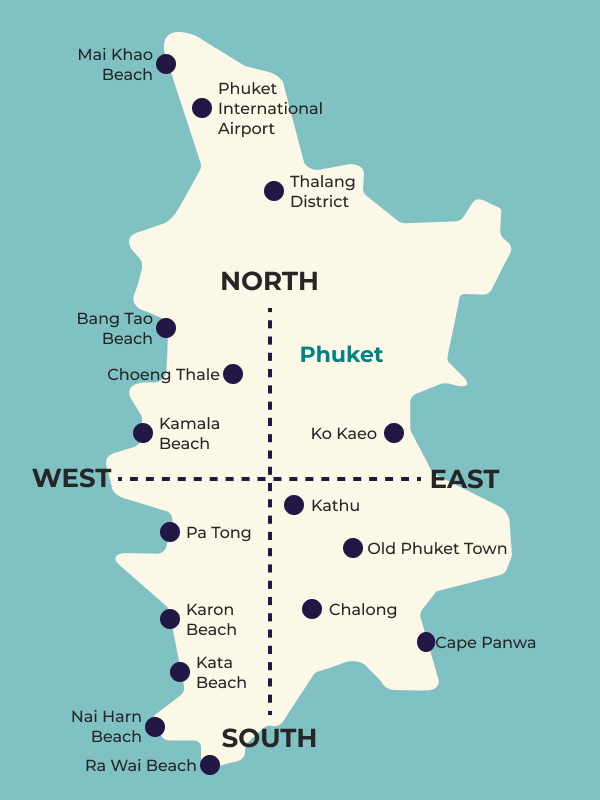
Here you go
So… how do you know what’s right for you?
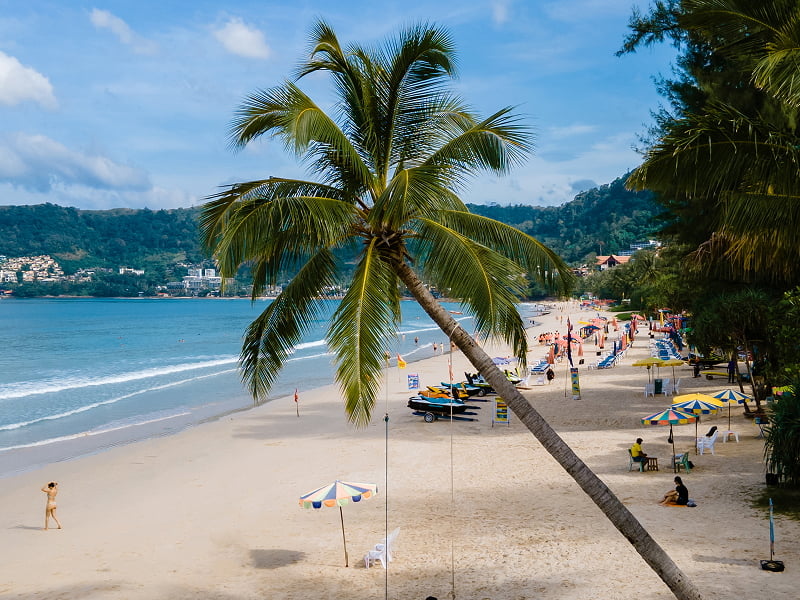
The North – Laguna, Mai Khao, Nai Yang
Green, upscale, and close to the airport.
Gated neighborhoods, villas, beach clubs.
Perfect for those looking for peace, comfort, and high quality of life – or who fly a lot.

Kathu – The Center
Nobody plans to live here. It just kind of happens.
Right in the middle of everything malls, clinics, gyms, schools.
No beach, but the prices are (almost) reasonable and the location is super convenient.
Phuket Town
As close to “city vibes” as you’ll get around here.
No beach, but you’ll find markets, nightlife, local restaurants, and cute cafés.
Less for families, more for young couples, or older ones rediscovering life etc.
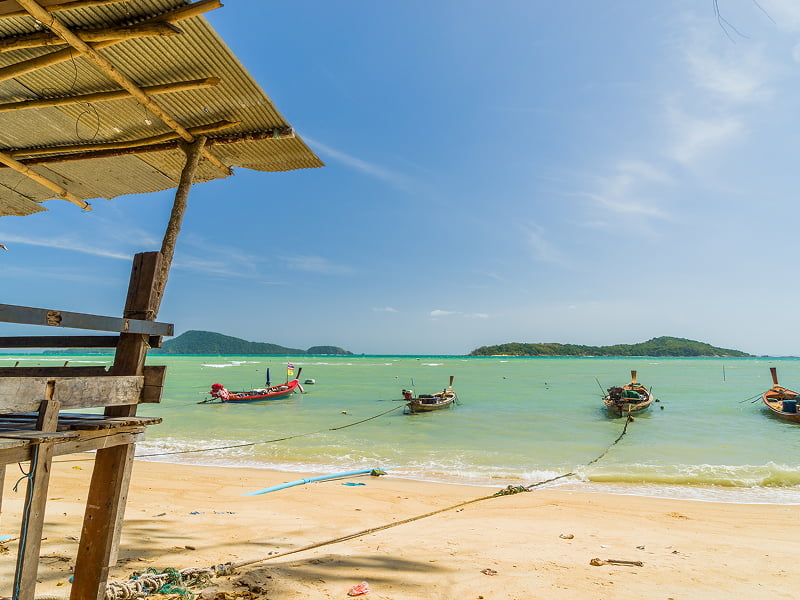
Panwa – The Bay No One Talks About
Waveless, peaceful beaches.
A very low-key but stunning area.
Luxury resorts, calm, local neighborhoods, and quiet waters year-round.
Ideal for those seeking serenity vacation – less for relocating families, more for retirees.
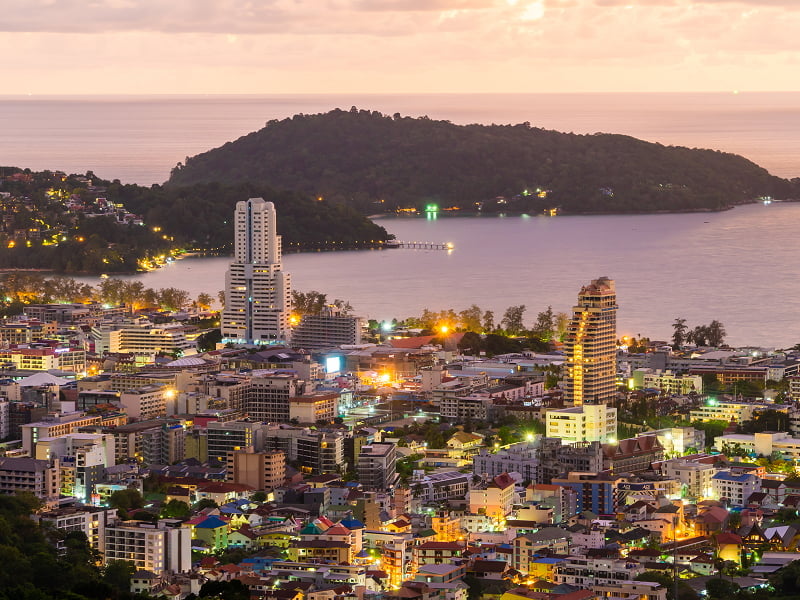
The West – Kata, Karon, Patong, Bang Tao
Like that hot guy from high school who shows up in every class trip photo – that’s West Phuket.
It’s what you’ve seen in the pictures.
Nightlife, restaurants, beach clubs, and tourist attractions.
Perfect for a vacation – not so much (or at all…) for family life.
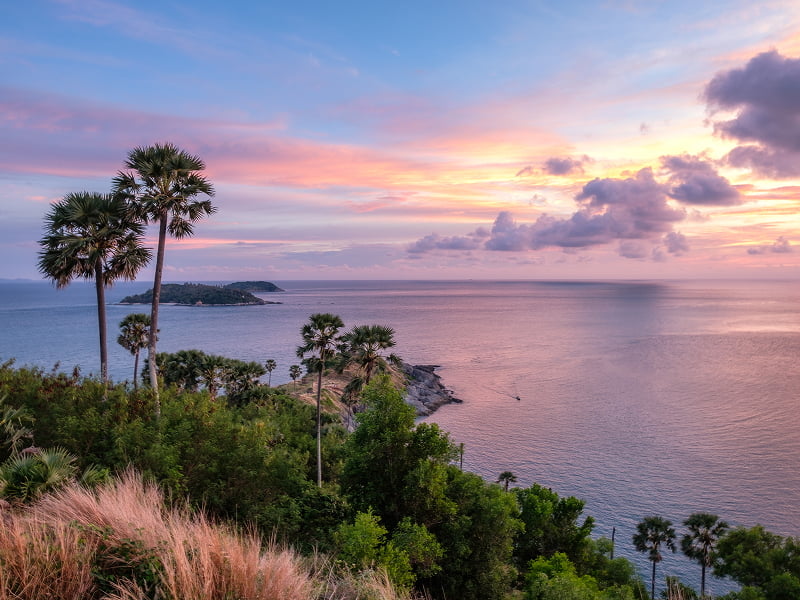
The South – Rawai, Nai Harn, Chalong
Phuket’s family-friendly, community-oriented side.
Close to schools, kids’ activities, and expat life.
Great for those who came to live, not just to visit.
Pros and Cons of Living in Phuket
Pros of Living in Phuket
Natural Beauty: Beaches, jungles, and island views all year round.
Warm Weather: Sunshine almost every day, even in rainy season.
Lower Cost of Living: Rent, food, childcare, and services are affordable.
Great International Schools: British, American, French, Montessori and more.
Easy Access to Healthcare: Private hospitals with international standards.
Growing Expat Community: Social groups, events, and support networks.
Laid-Back Lifestyle: Relaxed pace, casual dress, barefoot living.
Outdoor Activities: Diving, yoga, surfing, hiking, tennis, golf year-round.
Good Domestic Travel: Flights to Bangkok, Chiang Mai, and nearby countries.
International Airport: For easy access in and out with many international destinations.
Family-Friendly: Kid-friendly restaurants, schools, and nature activities.
Cons of Living in Phuket
Rainy Season: Long and wet from May to October, with occasional flooding.
Traffic & Road Safety: Busy roads and high accident rates, especially for motorbikes.
Visa Bureaucracy: Frequent renewals and complex paperwork.
Tourist Overload: High-season crowds, noise, and rising prices.
Island Limitations: Fewer job opportunities and limited cultural life.
Island Burnout: Life can feel repetitive or isolating over time.
Language Barrier: Basic life is fine, but deep communication needs Thai.
Quality Varies: Rentals, services, and schools can be hit or miss.
Import Costs: Imported items like cheese, baby gear, and cars are expensive.
Environmental Concerns: Waste, overdevelopment, and limited recycling.
Not Cheap as You’d Think: Costs add up if you are a family looking to live comfortably with international schools. Check out our COST OF LIVING (last part should be a link)
What Should I Know Before Renting a House in Phuket?
Here are 10 essential tips that will save you time, money, and frustration:
1. Swimming Pool
Beautiful, but expensive – expect your electricity bill to double
Check the pool’s age and maintenance schedule (should be cleaned twice a month)
Old pools can come with hidden problems
2. Water Pressure
With Phuket heat, you’ll be showering often – test pressure in all showers and sinks
Make sure there’s a good water pump
3. Air Conditioners
They run constantly – check that they’re clean and serviced
Plan on ~2,000 THB/month per unit in electricity
4. Noise & Location
Visit the house at different times of day – traffic, dogs, or rain could be issues
Avoid houses near Muay Thai gyms
Have kids? Check the distance from schools
5. Mosquitoes & Pest Control
Make sure all windows/doors have screens – if not, ask or install yourself
Schedule monthly pest control (mosquitoes, roaches, rats are common)
6. Landlords
Try to meet the landlord directly – even if using an agent
Ask who’s responsible for repairs
A good landlord makes a big difference
7. Furniture
Most homes are furnished – check what’s included and its condition
Confirm if you can remove or add furniture
8. Lease Agreement
Longer leases – better deals (and price stability)
Thai law allows leases up to 3 years
Standard deposit: 1-2 months’ rent
9. Cleaning
Request a deep clean before moving in
Be thorough: behind appliances, inside cabinets, bathroom tiles
10. Paperwork
At signing, check the landlord’s ID and proof of ownership
This matters later if you need to use the lease for visa or immigration purposes
1. Swimming Pool
Beautiful, but expensive – expect your electricity bill to double
Check the pool’s age and maintenance schedule (should be cleaned twice a month)
Old pools can come with hidden problems
2. Water Pressure
With Phuket heat, you’ll be showering often – test pressure in all showers and sinks
Make sure there’s a good water pump
3. Air Conditioners
They run constantly – check that they’re clean and serviced
Plan on ~2,000 THB/month per unit in electricity
4. Noise & Location
Visit the house at different times of day – traffic, dogs, or rain could be issues
Avoid houses near Muay Thai gyms
Have kids? Check the distance from schools
5. Mosquitoes & Pest Control
Make sure all windows/doors have screens – if not, ask or install yourself
Schedule monthly pest control (mosquitoes, roaches, rats are common)
6. Landlords
Try to meet the landlord directly – even if using an agent
Ask who’s responsible for repairs
A good landlord makes a big difference
7. Furniture
Most homes are furnished – check what’s included and its condition
Confirm if you can remove or add furniture
8. Lease Agreement
Longer leases – better deals (and price stability)
Thai law allows leases up to 3 years
Standard deposit: 1-2 months’ rent
9. Cleaning
Request a deep clean before moving in
Be thorough: behind appliances, inside cabinets, bathroom tiles
10. Paperwork
At signing, check the landlord’s ID and proof of ownership
This matters later if you need to use the lease for visa or immigration purposes
